📄 Digital book in PDF · read it on your phone or print it
The three layers in the tank, a treatment plant step by step, drainage fields and soakaways, tanks draining to a ditch or stream, the rules for England, Wales, Scotland and Northern Ireland, desludging, fault-finding and buying a house with a tank. Every topic has its own page: the drawing first, then what you need to remember. 69 illustrated pages.
🔒 Secure checkout · PDF by email · 30-day guarantee
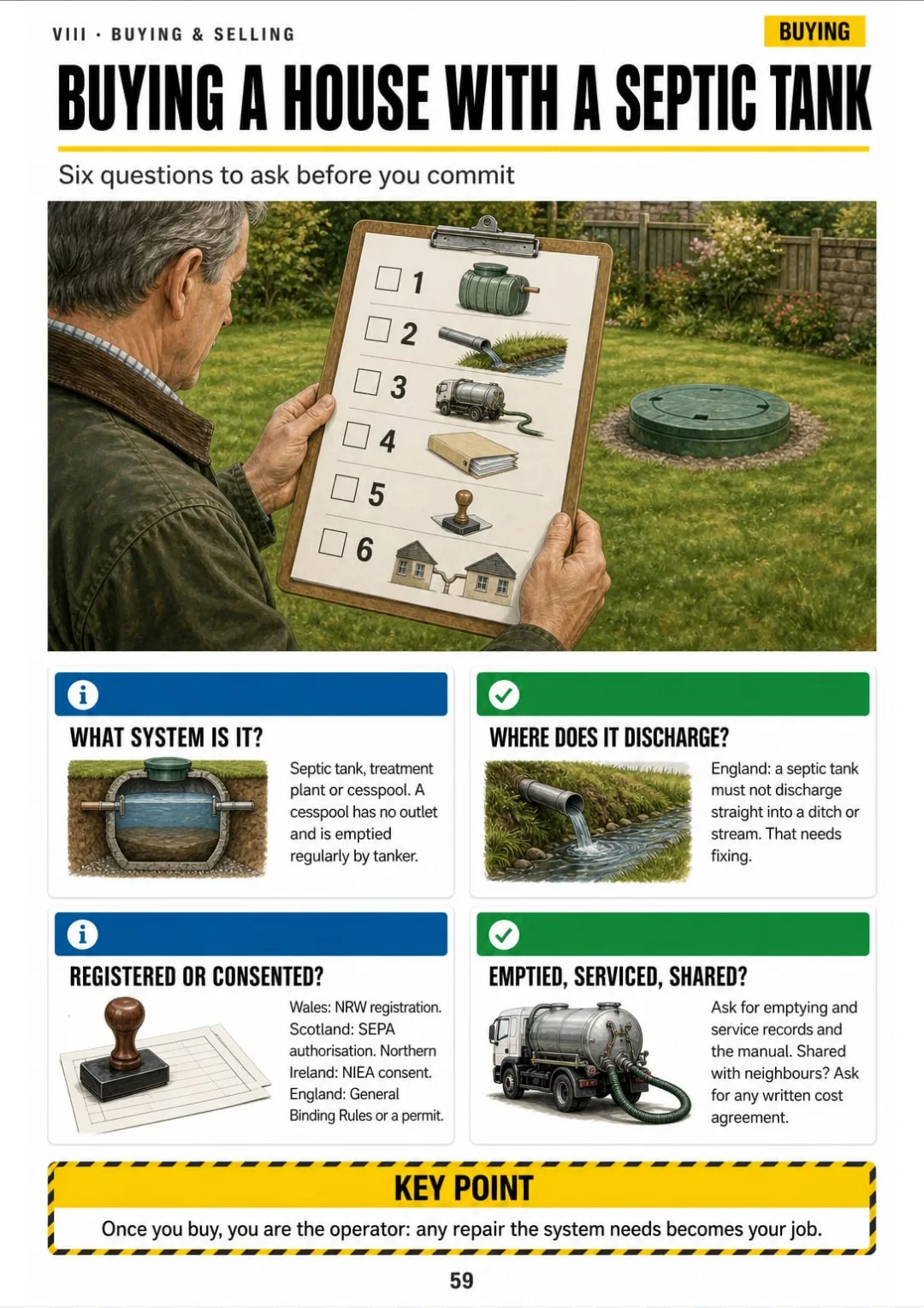
Every page has one large drawing and a box with the distances, steps and rules you need to know:


Swipe to see more →
These are real pages from the book. The table of contents is the full one: 9 parts and 65 topics.
You're standing over the treatment plant with the lid off, the alarm on the panel is beeping and you can't tell which chamber is meant to be doing what.
The manufacturer's manual is there, but it describes primary settlement, aeration and sludge return in long paragraphs. Read standing in the garden, none of it lines up with what's in front of you.

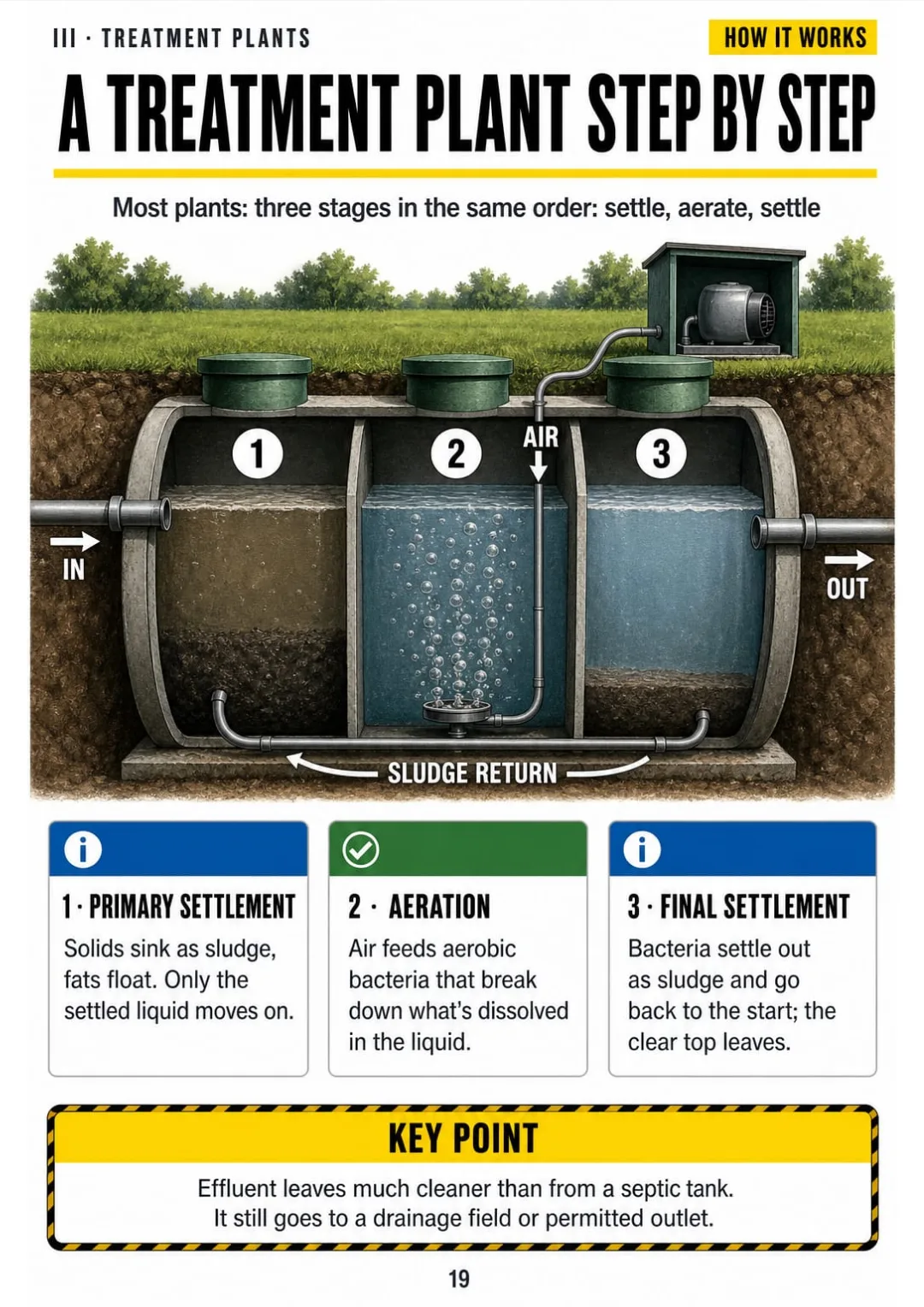
In the book, that same plant is one page: three chambers drawn in cross-section, primary settlement → aeration → final settlement, with the arrow that sends sludge back to the start and the blower marked where it sits.
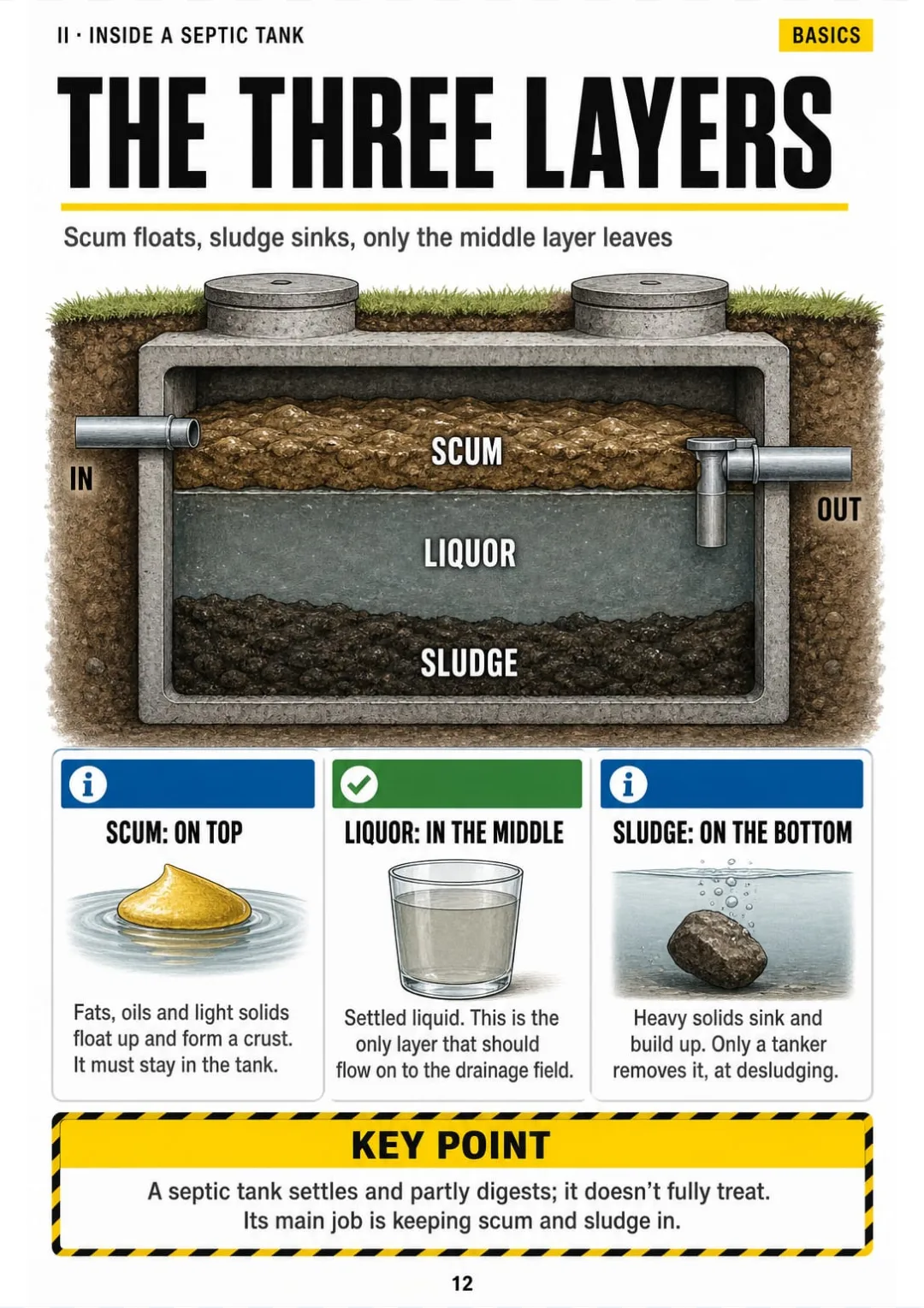
The blower and the diffusers, the control panel and its alarm, what a service visit covers, the three layers inside a septic tank: each of them has its own page too.
You look, you see which part is which, and you know what to check before you pick up the phone.

What's under your garden, inside a septic tank, treatment plants, drainage fields and soakaways, the rules by nation, looking after your system, tracing a fault, buying and selling, and the review checklists: 69 pages, all illustrated.
Think of it this way:
A wet patch has appeared over the drainage field and the grass there is greener than anywhere else. You need to know whether it's the field, the tank or the pipes, today.
You open the page on wet patches over the drainage field: the trenches drawn from below and the four boxes filled in, symptom, probable cause, what to check, what to do.

The same goes for desludging intervals, the percolation test, the rules for your nation, distances on the plot and buying a house with a septic tank: each one on its own page.
Septic Tanks Illustrated is 69 pages in 9 parts, one topic per page, all drawn, and it ends with the whole system on one page, a fault-finding quick card and a paperwork checklist.
What you see drawn, you don't have to memorize.
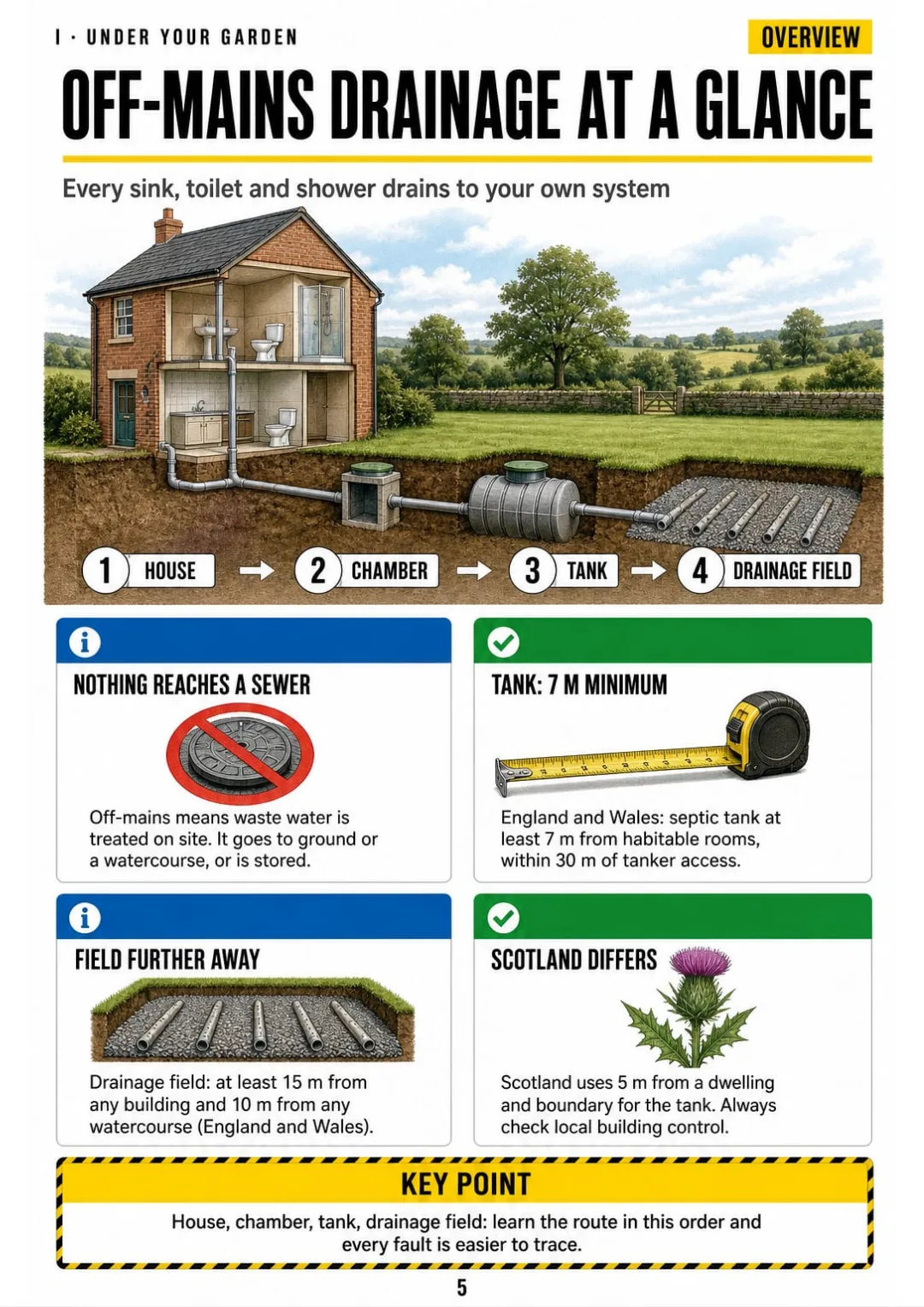
Off-mains drainage at a glance, septic tank vs treatment plant vs cesspit, how to identify yours, where the pipes run, inspection chambers and who is responsible for what.
The three layers, what the bacteria do, inlet and outlet T-pieces, two-chamber and onion-shaped tanks, tank size, venting and what the effluent still carries.
A treatment plant step by step, the blower and diffusers, the main plant types, the control panel and alarm, electrical safety, service visits and upgrading from a septic tank.
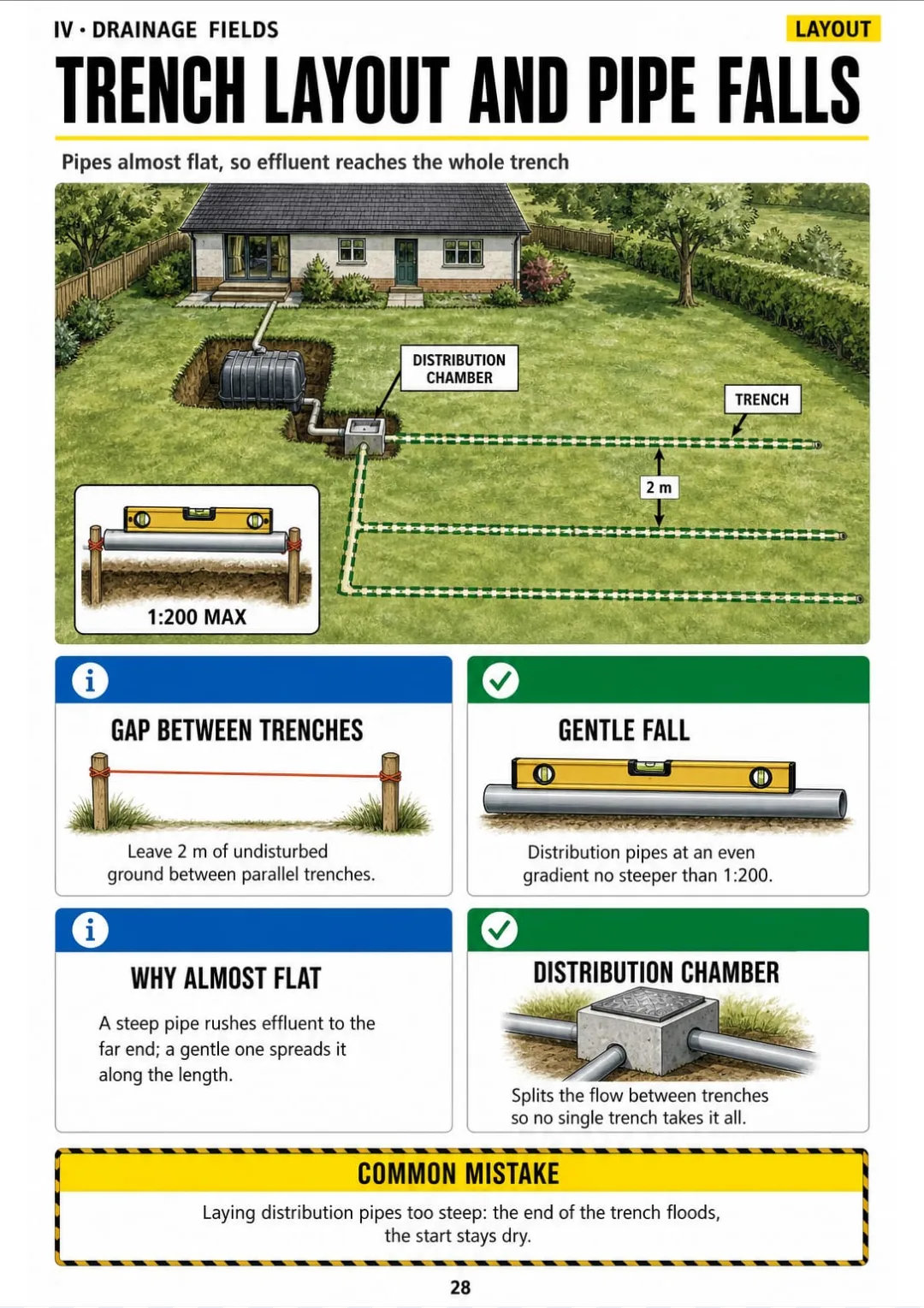
Drainage field vs soakaway, the field seen from below, trench layout and falls, the percolation test and your Vp result, sizing, groundwater, clay and rock, and signs of failure.
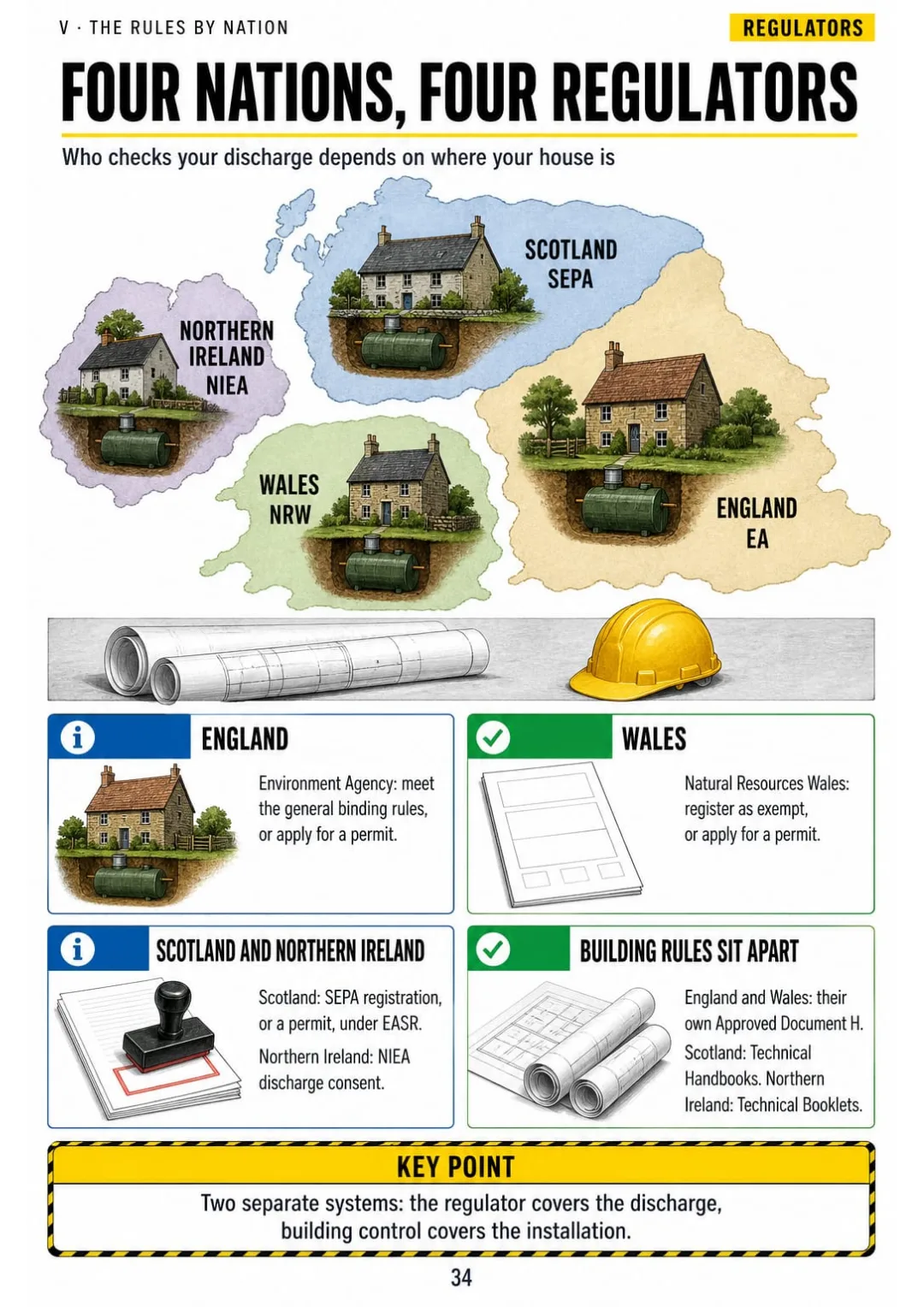
Four nations and four regulators, the General Binding Rules, tanks draining to a ditch or stream, registration in Wales and Scotland, consent in Northern Ireland, distances and building approval.
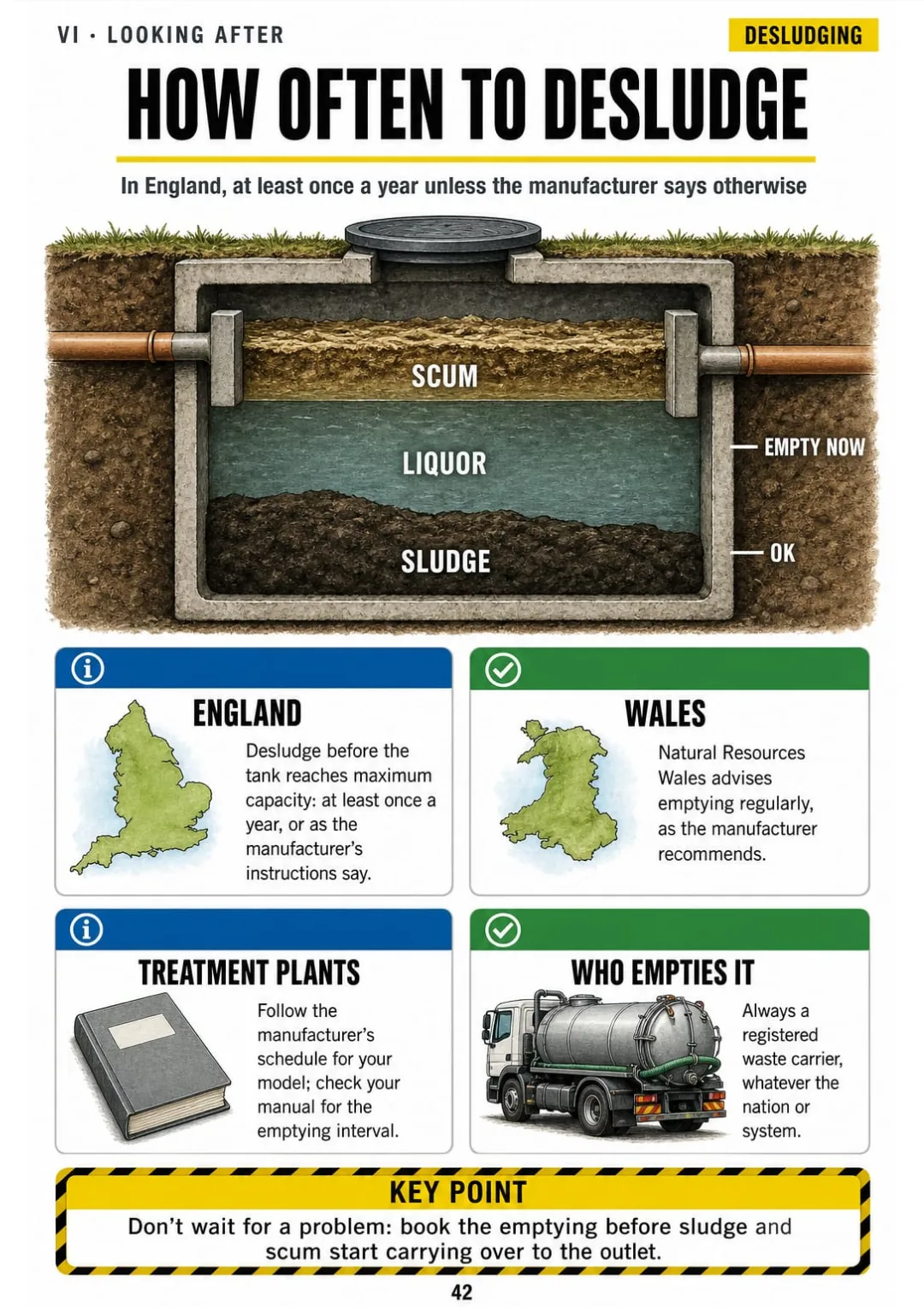
How often to desludge, the tanker visit, what can and can't go down the drain, water use, additives, protecting the field, your service log and the seasonal check.
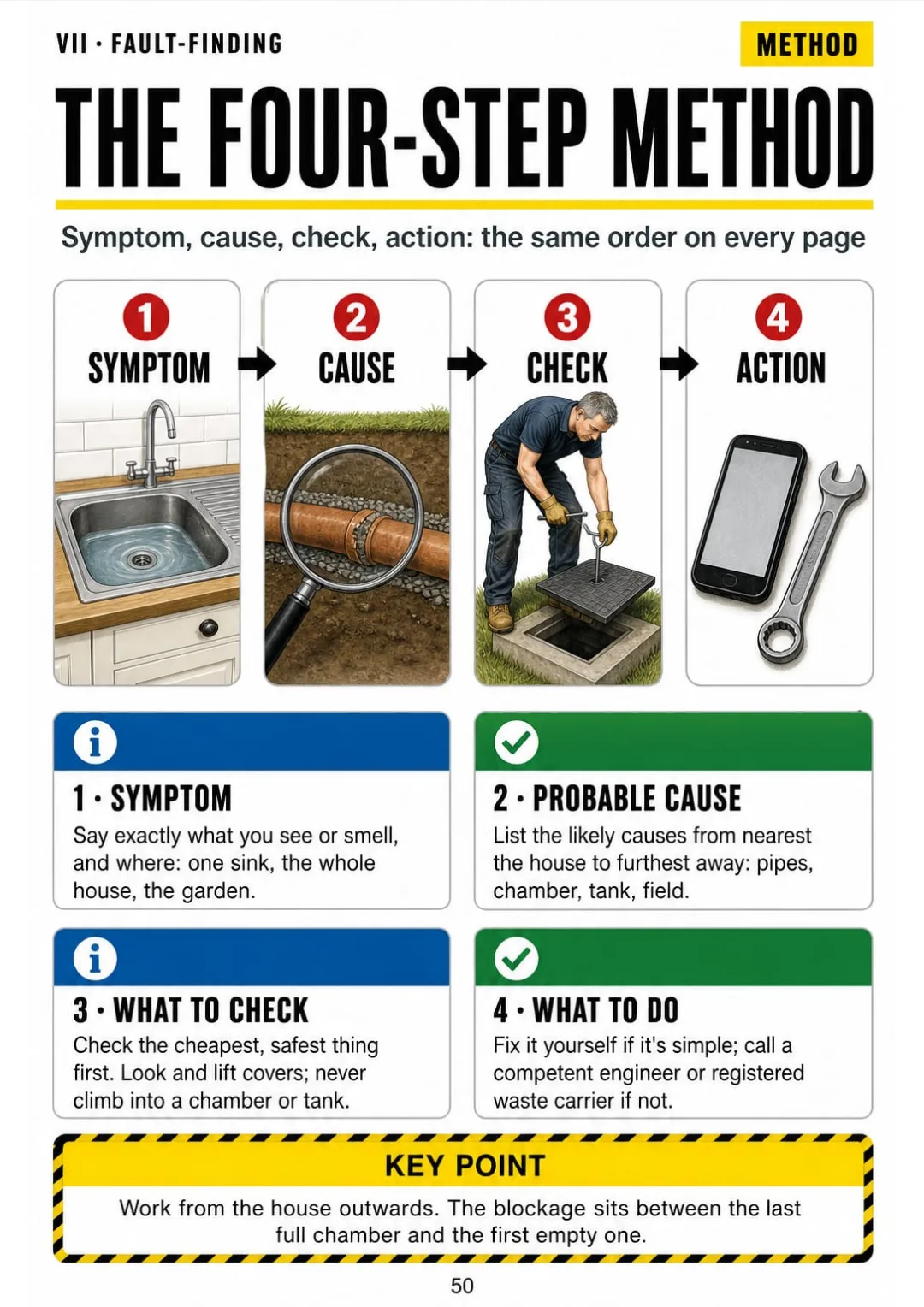
The four-step method applied to slow drains, gurgling, smells, wet patches, a brim-full tank, a sounding alarm, cloudy effluent, roots and collapsed pipes.
Buying a house with a tank, what to tell a buyer, the drainage survey, shared systems, extensions and extra bedrooms, and setting out a new installation.
The whole system on one page, the most frequent mistakes, a fault-finding quick card, a paperwork checklist and when to call a professional.
At the end of the book: The whole system on one page, a fault-finding quick card and a paperwork checklist.
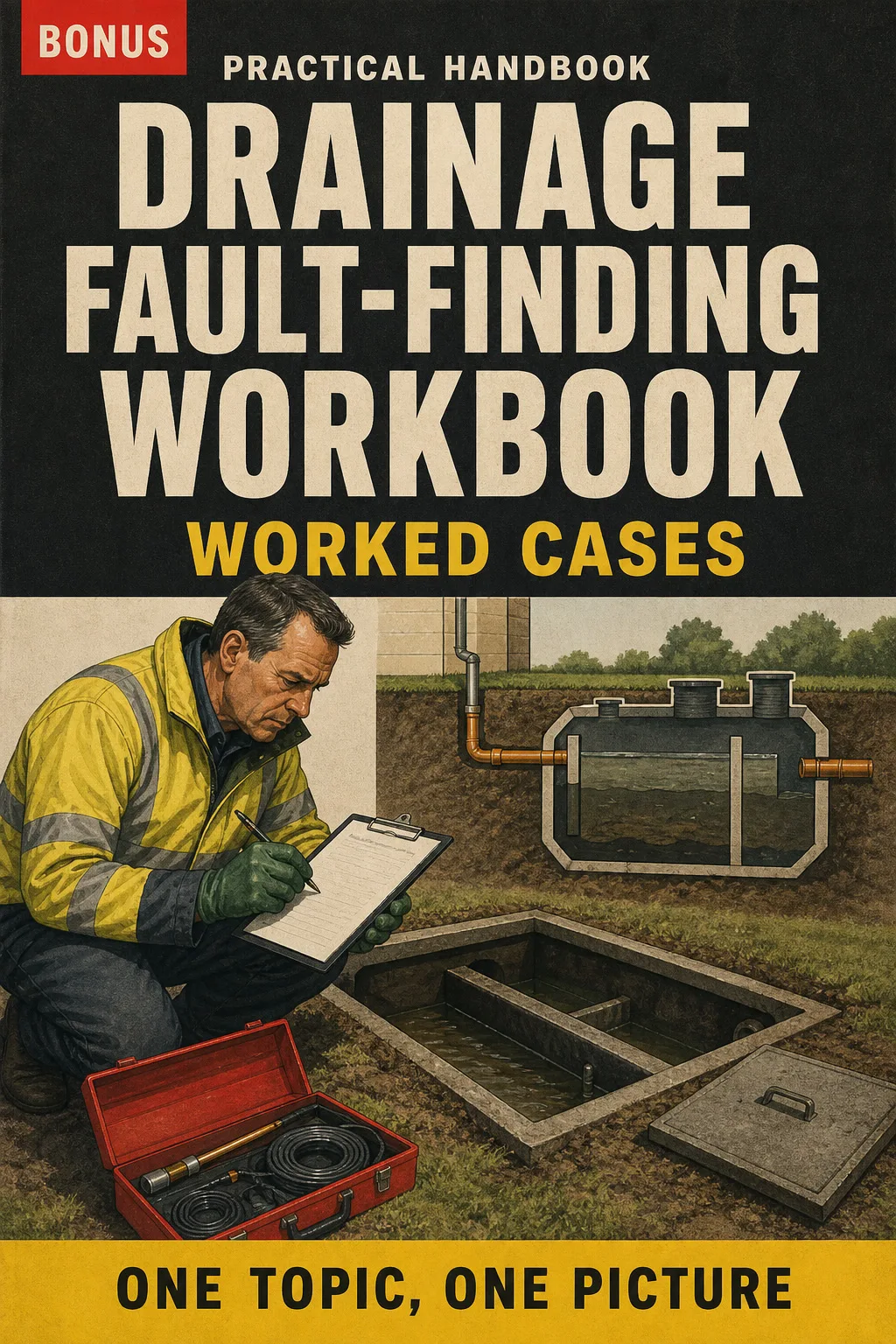
Practise on real-life cases — smells, gurgling, wet patches, a sounding alarm — and work out the cause in the same order every time before you pick up a spade or the phone.

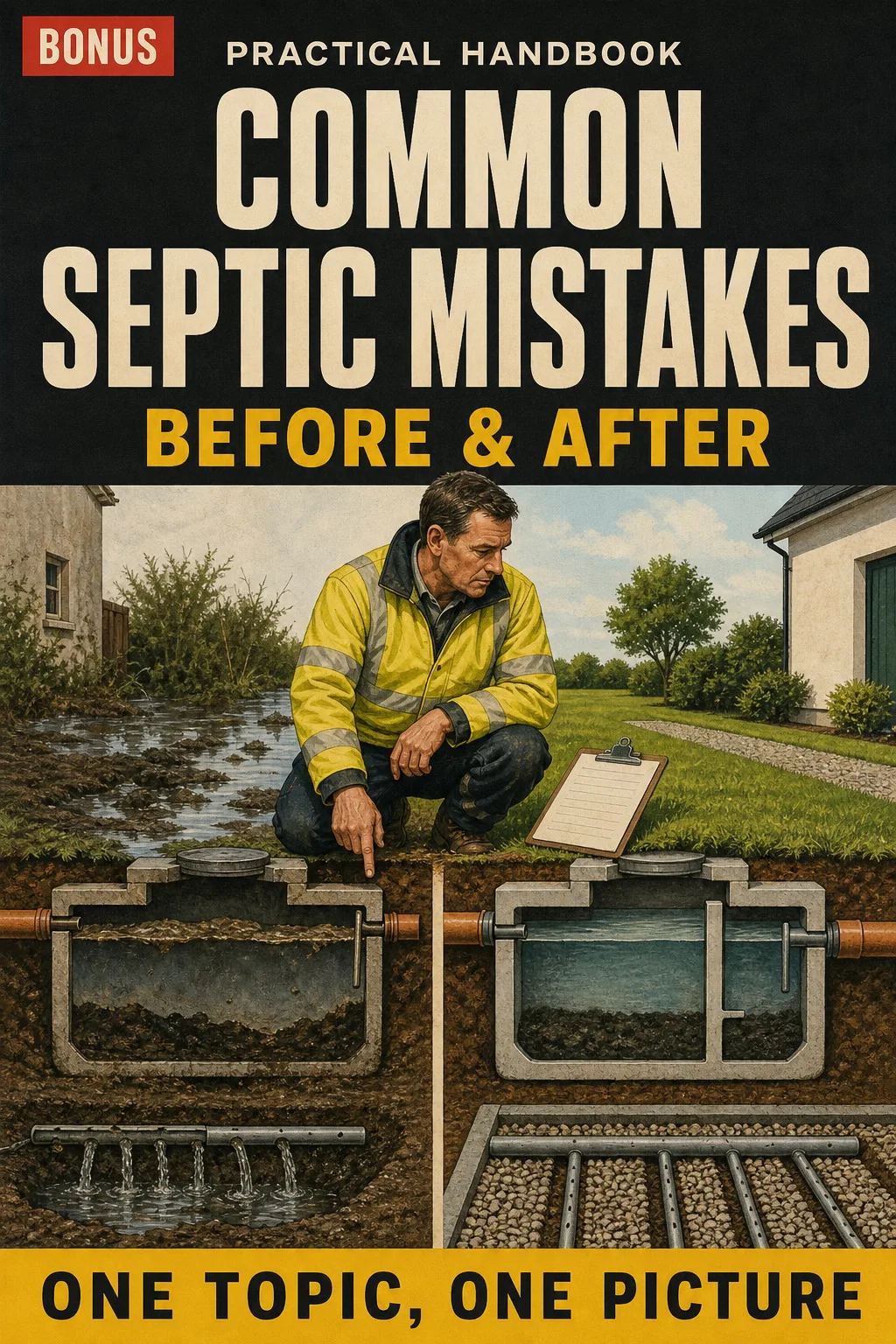
See the most frequent mistakes side by side with the right way — wrong falls, wipes and bleach, skipped desludging — so you spot them on your own system or on site at a glance.
📄 This is a digital PDF book sent to your email: nothing is printed or shipped.
PDF by email: We email you Septic Tanks Illustrated as a PDF, together with the two free books. It's a single payment: no installments, no extra charges.
You see what's under your garden, what each part does and what to check first when something smells, gurgles or beeps.
You know which system it is, where it discharges, which records to keep and what the surveyor will ask about, before they ask.
The whole system drawn, from falls and inspection chambers to the drainage field and the rules nation by nation, to have to hand in the van.
📄 This is a digital PDF book sent to your email: nothing is printed or shipped.
Try Septic Tanks Illustrated for 30 days, bonus books included.
We refund everything if the file won't open, if the book isn't what you see here, if you were charged twice or if the email doesn't arrive. Just email us.
You pay once. No subscriptions.
Yes. It starts from what's under your garden and builds up to fault-finding. If you already do groundworks, the parts on drainage fields, falls and new installations go further. England, Wales, Scotland and Northern Ireland are each set out separately.
The official guidance is free, and it's what counts for your property. This book doesn't replace it: it puts it in drawings, one topic per page, with the four nations side by side and one fault-finding order to follow. It's written with reference to Approved Document H, the General Binding Rules in England, guidance from Natural Resources Wales, SEPA and NIEA, and BS 6297 and BS EN 12566.
No. It's an independent illustrated book, not affiliated with any regulator or standards body. For your own property, the current official guidance is what counts.
No. It helps you understand your system and follow what they tell you. Installations, building work and anything inside the tank stay with a professional: never enter a tank.
All four. The rules on discharge, registration and consent change by nation, so England, Wales, Scotland and Northern Ireland each have their own pages, with the regulator for each. Building regulations are set out separately. The worked cases in the bonus book are written for this book, not taken from any official inspection.
As a PDF by email, to the address you enter at checkout, together with the 2 bonus books.
No. It's a one-off payment, with no subscription.
Yes. Print it at home or at a print shop and keep it in the van, or with your service log.
You have 30 days. We refund everything if the file won't open, if the book isn't what you see on this page, if you were charged twice or if the email doesn't arrive: just email us.
No more rereading guidance that won't stick.
The tank, the plant and the drainage field: you see them drawn.
You lift the lid knowing where everything is.
Drawings make studying faster.
The book is right below.
One-time payment: US$ 27 · Guarantee: 30 days · PDF by email
YES, I WANT SEPTIC TANKS ILLUSTRATED FOR US$ 27📄 This is a digital PDF book sent to your email: nothing is printed or shipped.